

DopaSpeak › Learn Portuguese
Learn Portuguese in your browserLearn Portuguese as a game: understand it sentence by sentence.
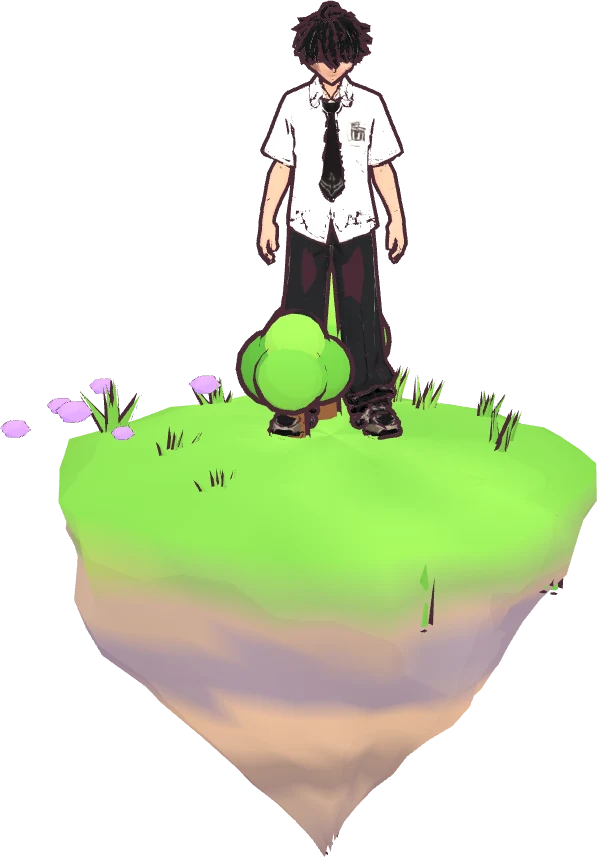
DopaSpeak is a language learning game. You walk across floating islands, pick the right answer and build Portuguese sentences from words.
Once you solve a task, the game shows you the sentence word by word in English. So you see how Portuguese is built, instead of just memorizing vocabulary.
Free to play · no download · first lesson without sign-up · phone, tablet and PC

At the bakery · A1
Olá, o que têm hoje?
How DopaSpeak takes apart a Portuguese sentence.
Sentences from the scenes at A1 and A2: the original at the top, each word with its literal meaning below, then the natural translation.
Finding the bus stop · A1
Desculpe, onde é a paragem do autocarro?
Ordering water · A1
Desculpe, gostaria de água, por favor.
Talking about last weekend · A2
O que fizeste no fim de semana passado?
Arranging to meet · A2
Olá! O que fazes este fim de semana?
What to expect from Portuguese.
Portuguese is a close relative of Spanish but sounds very different. The game mostly uses European Portuguese, for example “paragem” and “autocarro” for stop and bus.
The verb ending shows who is doing something, so the pronoun is often dropped.
And three things almost everyone trips over early on when they start from English:
Portugal swallows vowels
In European Portuguese unstressed vowels are reduced or almost disappear, so spelling and sound are further apart than in Spanish.
Nasal vowels with a tilde
“pão” (bread) and “não” (no) have nasal vowels, shown by the tilde ~. Diphthongs like “ão” have no English model.
False friends
“Puxar” means pull, so a door marked PUXE wants you to pull. “Pretender” means to intend, and “constipado” means you have a cold.
138 everyday scenes from A1 to B1.
Every scene is a short everyday dialogue: 45 at A1, 45 at A2 and 48 at B1. The scenes sit on topic islands such as eating and drinking, shopping, on the way or work and school. For example:
- At the bakery
- Finding the bus stop
- Ordering water
- How are you?
- Cash or card
- Buying a bus ticket
- Asking for the menu
- Booking a dentist
- Renting a bike
- Booking a table by phone
- Viewing a flat
- Rebooking a missed flight
Eight games, all in Portuguese.
Next to the lessons you play eight games, solo or with friends. They all take their sentences from your current lesson, so they are in Portuguese.
FAQ
Can I learn Portuguese for free?
Yes. You play DopaSpeak for free in your browser, with no download, with all 138 scenes for Portuguese.
Do I need to know anything already?
No. You start at A1 with short sentences like “Where is the bus stop?”. If you already know some, start at A2 and the worlds before it are open.
Can I hear the sentences?
Yes. The dialogue sentences are read out by an AI voice, sometimes a female and sometimes a male one. Single words and parts of sentences use your device's voice.
How far does it take me?
The scenes run from A1 to B1: 45 at A1, 45 at A2 and 48 at B1.
Does it work on my phone?
Yes, in the browser on phone, tablet and PC. There is also the Android app on Google Play.
Start with Portuguese today.
No download, first lesson without sign-up. On your first visit the button picks Portuguese for you.